


Advantages of Chain-Grate Biomass Boilers
Comprehensive Analysis of the Advantages of Chain-Grate Biomass Boilers
In today's era of pursuing green, low-carbon, and sustainable development, the industrial and commercial heating sector is undergoing a profound energy revolution. Biomass energy, as a renewable and s one of the preferred solutions for replacing traditional coal-fired boilers, owing to their mature technology, excellent comprehensive performance, and economic efficiency. Their advantages are primarily reflected in renewable fuel use, environmental benefits, economic viability, technological maturity, and operational stability.
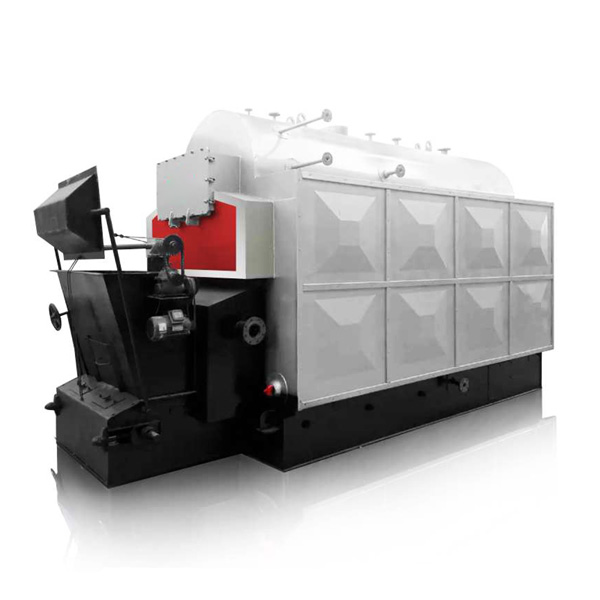
1. Environmental Advantages: Achieving Carbon Neutrality and Significant Emission Reduction
This is the core and most fundamental advantage of chain-grate biomass boilers. Compared to fossil fuel-fired boilers, their environmental benefits are transformative.
Carbon Neutrality: Biomass fuels are derived from organic materials such as crop straw, forestry waste (sawdust, wood chips), and rice husks. The carbon dioxide absorbed by these plants during photosynthesis roughly equals the carbon dioxide released during combustion, forming a closed-loop carbon cycle. Thus, using biomass boilers produces almost no additional greenhouse gases, helping enterprises achieve "carbon neutrality" goals and combat climate change.
Ultra-Low Pollutant Emissions: Modern chain-grate biomass boilers are typically equipped with efficient dust removal (e.g., bag filters), desulfurization, and denitrification systems. Their emissions of sulfur dioxide (SO₂) and nitrogen oxides (NOx) are significantly lower than those of coal-fired boilers, as biomass itself has very low sulfur content (usually <0.1%). Moreover, through complete combustion and efficient dust removal, smoke and particulate emissions are greatly reduced, easily meeting or even exceeding the strictest national environmental standards and effectively avoiding "black smoke" phenomena.
Waste-to-Resource Utilization: These boilers transform agricultural and forestry "waste" into high-value thermal energy, turning waste into treasure. This not only reduces environmental pollution caused by open burning of straw but also greatly promotes the development of a circular economy.
2. Economic Advantages: Low Operating Costs and Policy Incentives
Beyond environmental benefits, the economic advantages are a key focus for enterprises.
Fuel Cost Advantage: Compared to natural gas and electricity, biomass fuel costs are typically much lower. Although its calorific value may be lower than that of high-quality coal, the cost per unit of heat remains highly competitive. Especially in regions rich in biomass resources (e.g., agricultural provinces, forest areas), the widespread availability and stable prices of fuel can lead to significant operational cost savings for enterprises.
Government Policy Support: To encourage the development of renewable energy, many countries and regions offer financial subsidies, tax incentives, or preferential electricity prices for biomass energy projects. Investing in biomass boiler projects often qualifies for such subsidies, further shortening the payback period.
Low Retrofit Costs: For users with existing coal-fired boilers, the structure of chain-grate biomass boilers is similar to that of chain-grate coal-fired boilers, making retrofitting relatively straightforward and cost-effective. In some cases, existing boilers can be technically modified to switch fuels, reducing initial investment costs.
3. Technical and Operational Advantages: Maturity, Reliability, and High Automation
Chain-grate technology is a long-established and highly mature combustion technology. Its application to biomass fuels offers unique advantages.
Stable Operation and Ease of Control: The travel speed of the chain grate can be adjusted, enabling continuous, uniform fuel feeding and stable combustion. The boiler's load adaptability is strong, and its output is stable, meeting the heating needs of most industrial and commercial applications. Modern chain-grate biomass boilers commonly use PLC automatic control systems, enabling automatic feeding, slag removal, and air volume adjustment, significantly reducing labor intensity and reliance on operator experience.
Wide Fuel Adaptability: Chain grates are relatively tolerant of the particle size and shape of biomass fuels, accommodating various forms such as pellets, blocks, and chips (e.g., biomass pellets, briquettes, wood chips, crushed straw). This flexibility facilitates fuel procurement and utilization.
High Combustion Efficiency: Reasonable grate design, coupled with optimized air distribution systems (often using staged air supply), ensures sufficient residence time for fuel on the grate and complete combustion. Combined with secondary air disturbance in the furnace, combustible gases are burned more completely, effectively improving boiler thermal efficiency to generally over 80% or higher, reducing fuel waste.
4. Social and Strategic Advantages: Energy Security and Rural Revitalization
From a broader perspective, promoting chain-grate biomass boilers also has profound strategic significance.
Ensuring Energy Security: Reducing dependence on imported fossil fuels such as natural gas and oil by utilizing localized biomass resources enhances regional energy security.
Promoting Rural Revitalization: The collection, processing, transportation, and sale of biomass fuels can form a complete industrial chain, creating numerous job opportunities in rural areas, increasing farmers' incomes, and serving as a key driver for rural economic development and revitalization.


